That Old Binder in Your Closet Could Be Worth $50 — or $50,000. Here Is How to Tell.
The Pokémon card market has exploded. A single Pikachu Illustrator sold for $16.49 million in early 2026. A 1st Edition Charizard in perfect condition trades above half a million dollars. Even modern cards from sets released in the last two years can be worth hundreds or thousands. But most Pokémon cards are worth very little. The difference comes down to a handful of factors that most people do not know how to evaluate. This guide breaks down exactly what makes a Pokémon card valuable — and what does not.
Serving Miami & South Florida · Storefront in Davie, FL
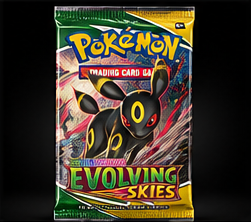
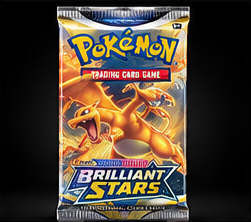
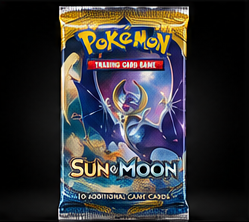
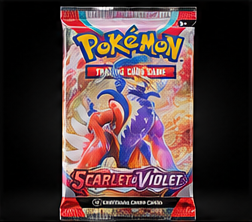
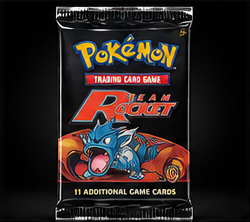
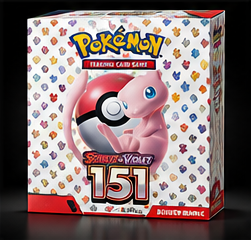


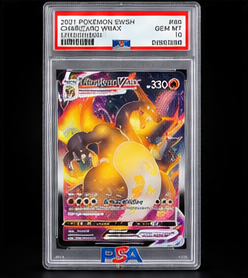
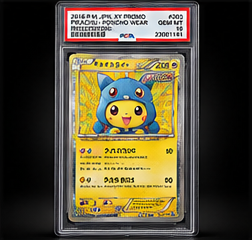
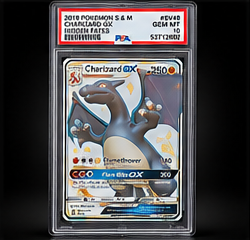
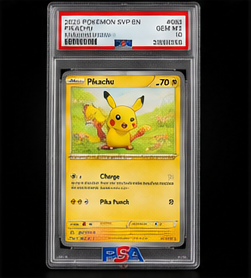

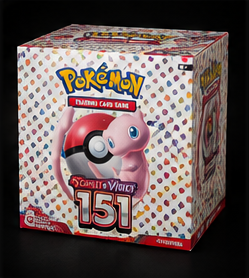
The Truth About Pokémon Card Values
Here is the reality that every guide should tell you upfront: the vast majority of Pokémon cards are worth between $0.05 and $2.00. Commons, uncommons, non-holo rares, and heavily played cards from any era make up the overwhelming bulk of every collection. They have sentimental value. They rarely have financial value.
The real money concentrates in a small percentage of cards — and understanding which ones command serious prices is what separates a profitable sale from a disappointing one.
The Five Factors That Determine Pokémon Card Value
- 01
Rarity and Card Type
Not all "rare" cards are created equal. The Pokémon TCG uses a rarity system — Common (circle), Uncommon (diamond), Rare (star) — but the actual market rarity depends on the specific card type within that hierarchy: Holographic Rares from vintage sets (1999–2003) are the foundation of the collector market. 1st Edition Prints carry massive premiums — often 5–20x over their Unlimited equivalents. Shadowless Prints sit between 1st Edition and Unlimited in both rarity and value. Shining Cards from Neo Revelation and Neo Destiny feature reverse-color artwork. Crystal Cards from Skyridge and Aquapolis are e-Reader era chase cards. Gold Star Cards from the EX era feature alternate-colored Pokémon with a star next to the name, often under 20 PSA 10 copies worldwide. Special Illustration Rares (SIRs) and Alt Arts from modern sets are the current generation's chase cards, with pull rates of approximately 1-in-50 packs.
- 02
Specific Card Identity
Within each rarity tier, specific Pokémon command premiums based on character popularity and cultural significance. Charizard dominates every era — the 1999 Base Set Charizard is the most recognized trading card in the world. Across eras, these Pokémon consistently command the highest values: Charizard (every era, every set it appears in), Umbreon (especially VMAX Alt Art "Moonbreon"), Pikachu (especially promos and illustrator cards), Lugia (Neo Genesis 1st Edition is a six-figure card at PSA 10), Mewtwo (vintage and Gold Star), Rayquaza (Gold Star and modern alt arts), and the original three starters (Charizard, Blastoise, Venusaur) as a complete set.
- 03
Condition and Grade
This is the single largest value multiplier in the Pokémon market. The difference between a PSA 7 and a PSA 10 on the same card can be 10–50x. Take the 1st Edition Base Set Charizard: a PSA 10 Gem Mint trades in the $500,000–$600,000 range. A PSA 9 clears $70,000–$90,000. A PSA 7 holds at $10,000+. A heavily played, ungraded copy might be $2,000–$4,000. Condition factors that graders assess include surface scratches, edge whitening, corner sharpness, centering, and print defects. For collectors wondering if their cards are in good enough condition to be valuable — the honest answer is that most cards from childhood collections have been played, traded, rubber-banded, and stored without sleeves. These cards still have value if they are the right cards, but they will not grade at the highest levels. A PSA 5 or 6 of a valuable card is still a valuable card — just not at the peak multiplier.
- 04
Population and Scarcity
The PSA Population Report (publicly accessible at psacard.com) tracks how many copies of each card have been submitted and what grades they received. This is critical data for pricing: a card with 500 PSA 10 copies is abundant in the graded market. A card with 8 PSA 10 copies is genuinely rare. When collectors talk about "low-pop" cards, they mean graded populations small enough that scarcity itself drives pricing — regardless of the card's original print run. This is why some Gold Star and Crystal-type cards from the early 2000s command extraordinary prices. The original print runs were modest, many were played and damaged, and the surviving Gem Mint copies number in the single digits or low teens.
- 05
Market Timing and Demand Cycles
The Pokémon card market is not static. It responds to cultural events, new game releases, YouTube and social media attention, and broader economic conditions. The market saw a massive spike in 2020–2021 driven by pandemic-era nostalgia and influencer attention, corrected in 2022–2023, and has been on a sustained upward trajectory since early 2024, accelerated by the franchise's 30th anniversary. Cards that were overpriced during the 2021 peak have found more sustainable price floors. Vintage staples have generally recovered and exceeded their previous highs. Modern cards are more volatile — prices can swing 20–40% on a new set release or a competitive format rotation.
Quick Reference: Notable Pokémon Card Values in 2026
All values are approximate ranges based on recent sales data. Actual value depends on exact condition and grade.
Pikachu Illustrator (1998, PSA 10)
$16.49 million (one known copy at this grade).
1st Edition Shadowless Charizard (PSA 10)
$500,000–$600,000.
1st Edition Shadowless Blastoise (PSA 10)
$80,000–$150,000.
Neo Genesis 1st Edition Lugia (PSA 10)
High six figures.
Skyridge Crystal Charizard (PSA 10)
$40,000–$80,000.
Shining Charizard Neo Destiny (PSA 10)
$15,000–$25,000+.
Gold Star Charizard (PSA 10)
$30,000–$70,000+.
Gold Star Umbreon (PSA 10)
$20,000–$50,000+.
Gold Star Rayquaza (PSA 10)
$15,000–$40,000+.
Umbreon VMAX Alt Art / "Moonbreon" (PSA 10)
$3,000–$5,000.
Charizard ex SIR Obsidian Flames (PSA 10)
$400–$900.
Iono SAR Paldea Evolved (PSA 10)
Strong triple digits.
Lillie SR GX Battle Boost (PSA 10, Japanese)
$12,000–$15,000.
What Your Childhood Binder Is Probably Worth
A mixed binder of played-condition Base Set, Jungle, and Fossil cards — mostly commons and uncommons, a few non-holo rares, maybe one or two holo rares with edge wear — is realistically worth $50–$300 depending on the holos. If there is a Charizard, Blastoise, or Venusaur holo in reasonable condition, those individual cards may represent the bulk of the binder's value.
We tell you this not to discourage you — but because realistic expectations are more useful than hype. And because the occasional binder does contain a sleeper worth four or five figures. It happens. That is why an expert evaluation matters.
How to Get Your Cards Evaluated
If you are in the Miami area, the most efficient path is an in-person evaluation at Balili Jewelry & Pawn. Bring your cards — binders, slabs, boxes, whatever format they are in — and we will identify every significant card, assess condition, and give you a market-based valuation.
This is a free service with no obligation to sell. You walk away knowing exactly what you have and what it is worth in today's market.
The Grading Question: Should You Grade Before Selling?
When Grading Helps
Grading — submitting your card to PSA, BGS, or CGC for professional evaluation and encapsulation — can dramatically increase a card's value. A raw Near Mint card worth $100 might be worth $400–$600 at PSA 10. The general rule: grading is worth it for cards with a raw value above $50 that appear to be in excellent condition. For cards significantly above that threshold — a raw 1st Edition Charizard, for example — grading is nearly always worthwhile because the PSA 10 premium is so dramatic.
When It Is Not Worth It
Grading costs $25–$100+ per card (depending on service tier and turnaround time). Turnaround times range from weeks to months. And there is no guarantee your card will receive the grade you hope for. If a card you expected to be a PSA 10 comes back as a PSA 8, the grading fee was largely wasted. For cards below the $50 raw-value threshold, the math usually does not work. Balili Jewelry & Pawn can help you assess which cards in your collection are strong grading candidates — and we buy both raw and graded.
Related Pokémon & Collateral Services
Direct conversion path for visitors ready to sell.
Buy Pokémon Cards MiamiFor visitors who discover they want to buy.
Collateral LoansFor visitors who want to borrow against a valuable collection.
Gold Buyer MiamiAdjacent asset evaluation page.
Sell Diamonds MiamiAdjacent asset evaluation page.
How It Works
- 01
Bring Your Cards
Visit Balili Jewelry & Pawn with whatever you have — a childhood binder, a curated collection, graded slabs, or an estate lot. No sorting required.
- 02
Free Expert Evaluation
We identify every significant card, verify variants and condition, and provide a market-based valuation tied to real recent sales data.
- 03
Your Choice
Sell for cash, get a collateral loan, or simply walk away knowing what your cards are worth. No obligation.
Frequently Asked
No. Most 1990s Pokémon cards — commons, uncommons, and non-holo rares — are worth very little regardless of age. Value concentrates in holographic rares, 1st Edition prints, and cards in exceptional condition. A 1999 common Rattata is still worth pennies.
Related Services
Sell Pokémon Cards Miami
Direct conversion path for visitors ready to sell.
Learn moreBuy Pokémon Cards Miami
For visitors who discover they want to buy.
Learn moreCollateral Loans
For visitors who want to borrow against a valuable collection.
Learn moreGold Buyer Miami
Adjacent asset evaluation page.
Learn moreSell Diamonds Miami
Adjacent asset evaluation page.
Learn moreCome See Us In Person
Visit Balili Jewelry & Pawn at 4343 S State Rd 7, Ste 104, Davie, FL 33314. We serve customers across South Florida.
Find Out What Your Cards Are Worth — For Free.
Bring your Pokémon cards to Balili Jewelry & Pawn for a professional evaluation at no cost and no obligation. Whether your binder holds $50 in bulk or $50,000 in vintage holos, we will tell you exactly what you have.